I often get emails from people who are considering or preparing for a move to Maputo. Many of the questions from prospective residents revolve around the same themes, so I decided to consolidate some of my answers in one post. Hopefully it will be helpful.
First off, please note that this is obviously my personal opinion, based on my unique experiences during nearly 5 years spent in Mozambique. We all have different perspectives based on where we are from, our expectations, our respective levels of comfort, our neuroses, our prior experiences living abroad. A bit of information about me to help you "interpret" my advice about living in Maputo:
- I am female, born and raised in New Mexico until I was 15. From the age of 15 on, I essentially got nomadic fever and did a series of exchange programs and stints abroad that took me to Brazil, Italy, Austin (Texas) and many, many places in between.
- I lived in Mozambique between the ages of 23 - 27. I went there as a single girl, but nearly immediately got into a relationship with the man who eventually would become my husband. So for all practical purposes, I was part of a couple while in Moz.
- I had previously lived abroad by myself several times, including in Rio de Janeiro, which can be a wonderful but pretty tough city. I consider myself to be quite street smart, and am not shocked by very many things these days. Rio was pretty much my comparison city for a lot of my observations about life in Maputo.
- I moved to Mozambique to work as a freelance consultant for private sector development projects, as did Ricardo (my husband). Neither of us had a job package, our housing wasn't paid for by an employer, and we didn't have the same structure/support that a lot of people have through NGOs or Embassy jobs. As a result of being freelance, our cash flow was often highly unpredictable so we tried to live on as much of a budget as possible.
- That said, while I am totally willing to be a trooper and live in whatever circumstances are necessary, I appreciate a certain level of comfort when available/feasible. I value beautiful things, a clean house, a safe neighborhood, running water, etc.
Now that you have a bit of information about who I am and where I'm coming from, here is some advice on living in Maputo from yours truly.
1. Housing
Maputo is expensive when it comes to housing, almost outrageously so. I wrote an entire post on finding housing in Maputo here, so please read that for more detailed information. In a nutshell, you can't really find a decent 2-3 bedroom apartment (read: older, non-renovated kitchen and bath, but typically with beautiful hardwood floors and lots of 'character') in a desirable neighborhood for less than US$850 per month these days. You should really budget US$1,000. If you want to live in a new (or recently renovated) apartment, definitely think more along the lines of $2,000 and up. There are lots of cute houses in Maputo, but they come at a premium, somewhere around $2,500 and up for one that is safe and in a good neighborhood.
Speaking of neighborhoods, try to find a place in Polana, Sommerchield or Ponta Vermelha. They are all centrally located, have lots of retail/entertainment options close by, and don't require the use of a car for 75% of the things you might want to do. Sommerchield II, Triunfo and Costa do Sol are nice neighborhoods as well, but they are far from the city center, and having a car is a must. There are also some decent options along Av. 24 de Julho and Av. Eduardo Mondlane up into the Alto Maé neighborhood, but these are definitely older apartments with potentially higher security issues.
2. Safety
In my opinion, and certainly compared to places like Rio and Joburg, Maputo is a safe city. Obviously your opinion might be different if you've never been to or lived in a city with real violent crime problems. Compared to a small town in Europe or the US, Maputo may seem a bit intimidating. You need to be street smart in Maputo, for sure. 95% of the crime that happens in the city is a result of opportunism (i.e. someone driving with the window down while talking on the phone has their cell snatched out of their hand by a guy running by on the street). There are cases of home robberies, carjackings and assaults, but for the most part they are non-violent and relatively rare. Most importantly, if you are the victim of a crime, you should cooperate with whatever the criminals want and NOT RESIST. People get hurt when they protest or react to what is happening. No laptop/wallet/phone is worth getting hurt over!
The keys to staying safe are a) to be discreet - don't flash around your wads of cash, use cheap/small jewelry, don't use a giant digital camera in places you are unfamiliar with, etc.; b) be fast about entering and exiting your car and your home, and don't linger in the car chatting with a friend if you drop them off after a night out; c) vary your daily routines as much as possible so you aren't predictable; d) don't walk around unfamiliar places at night; e) don't walk alone in isolated places, day or night, even if you are jogging (and when you jog, don't wear an iPod!); f) don't answer the door for people you don't know and that you didn't ask to come to your house - if it's a company employee at the door, make sure they show id before you let them in, and it might even be a good idea to call the company to verify they sent someone. There are more tips, for sure, but these are the ones that come to mind now.
3. What to bring from home
Maputo is growing so quickly that it's hard to say you will be able to find thing x but not thing y in the city. The bottom line is that you should bring anything that is crucial to your health or happiness with you. This includes specific medicines, your favorite face cream or vitamins, the makeup brand you can't live without, a tea or perfume or treat that reminds you of home, hobby supplies you can't live without, books in your language that may be difficult to source outside your country, etc. In general you can find whatever you need either in Maputo or across the border in South Africa, but you will likely pay a premium, and you may not find the particular brand you want. Clothes and shoes tend to be of shoddy quality and quite expensive in Mozambique (save for the occasional treasure found at a second-hand market), so you should bring those things with you for sure.
After several years living in Moz, my "bring from home/stock up while visiting home" list consisted of: clothes, shoes, makeup, face cream, books, canned green chile, powdered red chile, real vanilla and almond extracts, pão de queijo mix, electronics (much, much cheaper in the US), journals and jewelry supplies. Actually, jewelry supplies were the main one. Ricardo actually rejoiced the day we moved because, among other reasons, we'd never have to haul beads and sterling silver findings through customs and security checks again for a very, very long time.
4. Do I need a car?
It depends on where you live, where you work, and how much you want to travel (in comfort). Taxis are plentiful in Maputo - and we have a great guy, Zeca, to recommend - and many things are within walking distance, so it's definitely feasible to live well without a car. We went without a car for 2.5 years and it was fine. However, once we bought our car (a 1996 Honda CR-V) our quality of life definitely improved. We could travel with more ease, we went out a night a lot more, and we were more effective at grocery shopping because we could purchase more than we could carry.
5. How easy is it to find a job in Maputo?
Not so easy. If you are a foreigner and plan to work in Maputo, it's best if you line up a job prior to your move. I'd say don't count on finding a job on the ground unless you are a specialist in a field you know is in demand and is under-represented among the foreigners and Mozambicans currently in the workforce, or you have some ace up your sleeve that will guarantee you land a job. Mozambique recently changed the law regarding employment of foreigners, making it much more difficult to work there if you are not local. There are quota systems and time limits, the whole 9 yards. Definitely read the law (the link above has the versions of the law in Portuguese and English) and know your rights and restrictions regarding employment. The new law even regulates volunteer and consulting work, so a lot has changed from the days when international consultants and do-gooders could work with no real paperwork or Government approval required.
6. Health
There are decent health facilities in Maputo, not so much in the rest of the country. Do your best to stay well and avoid accidents, and take out international health insurance that will cover you in case of something catastrophic, including the need for air evacuation. There are several clinics in town that are perfectly fine for routine procedures and consultations - Clínica Sommerchield, Clínica 222, Clínica Cruz Azul, Instituto do Coração, and the Swedish Clinic, just to name a few. For more complicated procedures or to see certain specialists, it's best you go to South Africa.
Be sure to get all the recommended vaccinations before you move to Moz - it may seem like overkill, but take it from Rico's experience, it's better to have a vaccination than to get, for example, Hepatitis A and have to suffer through it. In terms of malaria, yes it is a risk. Talk to your doctor, your employer and friends on the ground to see what they recommend. Everyone goes about malaria prevention differently. It depends on where you are (geographically), what kind of work you are doing, any risk factors or health conditions you may already have, how long you will be in an endemic area, and your comfort level with the possibility of contracting malaria. Personally, I didn't take malaria meds. Neither did Rico. But we were fully prepared for the possibility and consequences of contracting malaria and decided the risk was acceptable given the potential side effects of being on meds for multiple years.
7. I have other questions...can I contact you?
Yes, for sure. If you write me a nice, personal email asking for my advice and giving me some information on who you are and why you are moving to Moz, I will almost certainly respond. If you send me a mass email or a request that makes it seem like it is my obligation to advise you how to get a job and find a house in Maputo, I might not.
Edited to add:
8. Portuguese
Your experience in Mozambique will be greatly enriched (or at the very least, facilitated) if you learn some Portuguese. There are increasingly more language-learning options in Maputo, including group classes at the Brazilian Cultural Center, as well as private Portuguese teachers of varying competence. If you are interested in learning Portuguese and want to attend a class, I suggest you check with expats already on the ground to see if they have recommendations. I've heard some horror stories about teachers who don't know their grammar, and who can't provide adequate explanations to confused students about why a particular tense or word is used in a certain context. You can also learn using a program like Rosetta Stone, or the Michel Thomas method. Either way, it's worth your effort to learn even a bit of the language.
The "problem" is, it's eminently possible to get by in Maputo without ever learning more than two or three words of Portuguese. There is a giant expat community that often uses English as a working language, there is a large South African population in the city (and increasingly more Zimbabweans looking for a new lease on life), many Mozambicans have lived abroad either for work/school or during the war, and due to the fact that Mozambique is the lone Portuguese-speaking country in a sea of English-speaking neighbors, your everyday random citizen is much more likely to know a couple of phrases in English (or even be fluent) than, say, in Brazil where bilingualism is tied to social class. It is feasible in Maputo to speak English to waiters, crafts sellers and some taxi drivers and manage to get what you want most of the time.
The good part of the predominance of English in Maputo is that it makes it much more tourist-friendly; the bad part is that it permits expats to go for years, really, without ever learning a lick of Portuguese.
I admittedly had a huge advantage upon moving to Mozambique in that I already spoke super fluent Portuguese as a result of having lived in Brazil as a teenager. That said, make no mistake, there is a big difference between Brazilian Portuguese and Mozambican Portuguese. The accent and vocabulary are influenced by Continental Portuguese (Portugal), but there are also lots of regionalisms and locally-specific slang. I actually had a hard time understanding a lot of people in my first 6 months in Mozambique, and even after all the time we lived there, I would still occasionally run across someone - a guarda or empregada, for example - that I couldn't understand to save my life, and vice-versa!


 Raw silk - Hoi An, Vietnam.
 Walls of the old Fortaleza - Maputo, Mozambique.
 Rafting in a crocodile-infested (!) river in Swaziland.
 Bananas for the local market - Boane, Mozambique.
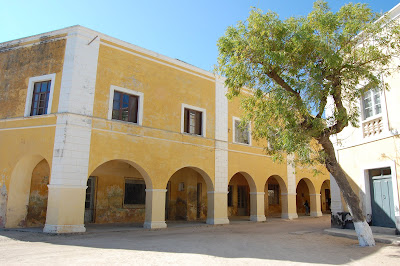 Colonial Portuguese architecture - Ilha de Moçambique.
 Passing the time away - Trinidad, Cuba.
 Bondinho - Santa Teresa, Rio de Janeiro.
 The kitchen wall - Casa Rosa, Rio de Janeiro.
 Still life - Chobe, Botswana.


.JPG)

