Showing posts with label books and films. Show all posts

Sunday, November 25, 2018

Books Roundup 2018

This year I have torn through the books (in paper, not digital, I just can't with the e-readers). Reading brought relief when grieving the loss of my pregnancy with Baby AB, relaxation while on the beach in Hawaii, and welcome entertainment while in Peci where there is no internet or even a good phone signal. Here is the list of the 16 books I've read so far in 2018:


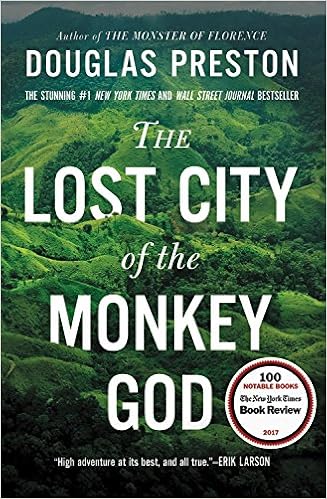
The Lost City of the Monkey God by Douglas Preston
This was my first book of the year. Fresh with grief and having taken a physical pummeling from the loss of the baby and resulting hormonal swings, I desperately needed a book I could lose myself in. My mom gifted me this book at just the right time. A mix of anthropology, adventure travel, and radar technology, this true story tells of a lost city being found in the Honduran jungle. Incredible to think that entire empires lie buried under vegetation. The title annoyed me (smacks of white male expedition marketed with exotic language to the people back home - which is exactly what it is on some level) but still I really enjoyed the story.

Song of the Lion and Spider Woman's Daughter by Anne Hillerman
I grew up reading Tony Hillerman's mysteries and remember staying up late, flipping the pages until my hands ached, unable to pull myself away from the stories of Leaphorn and Chee and the Dinè (Navajo) way of life. As a New Mexican, I appreciated the sense of place and often took Hillerman books with me while living abroad to soothe my saudades (or perhaps just make them worse). When I found out that Tony's daughter Anne had continued the mystery series, emphasizing the perspective of Bernadette Manuelito, a female detective, I was excited to return to the characters and scenery I so enjoyed years ago. Unfortunately it was a letdown. Perhaps I'd excessively built up my expectations, or maybe it was the difference of reading as an adult vs. a teenager, but I found the storylines to be predictable and lacking that urgent page-turning quality I remembered in the original series. I read these on while on our honeymoon in Hawaii in February, and they were definitely good enough for a beach read or to pass the time on the plane. I don't plan on reading more in the series, though... 


Love Africa by Jeffrey Gettleman
This one hit me hard. Part travel narrative, part political essay, part memoir. Intelligent yet humble writing, and deep honesty from the author about his past mistakes. I loved the stories, felt compassion for the characters, and appreciated the complexity of the situations in which the author found himself. It also stirred up nostalgia for East Africa, and a desire to keep traveling and keep writing no matter what. Fantastic book, I can't wait to read more from him.

Shark Drunk by Morten Stroksnes
The story of trying to catch a Greenland shark, a poorly-understood cold water giant that I'd first heard about while watching the tv show River Monsters and found fascinating. I was expecting a mix of science, adventure, and Nordic culture - and I suppose it was all of those things - but somehow the book dragged on and felt bland. Maybe it was because of translating nuances (it was originally written in Norwegian), or maybe it was just an accurate portrayal of the slow pace of time while fishing. Whatever the reason, I found it very difficult to get through and nearly abandoned ship several times before finally, stubbornly, turning the last page.
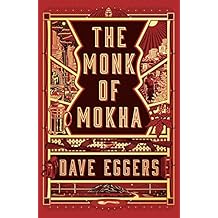

The Monk of Mokha by Dave Eggers
This was perhaps my favorite of all 2018. A true story, set in San Francisco and Yemen, about a young man who successfully revitalizes the Yemeni coffee industry despite widespread skepticism, production challenges, and war. A story of entrepreneurship, agriculture, development, politics, immigration, cultural ambassadorship, and global commerce. And, of course, coffee. I learned so much and can't wait to try a cup of specialty Yemeni brew one day here in San Francisco, even though it is hard to find and costs $16/cup, and as a pedestrian coffee drinker I am unlikely to appreciate its subtle aroma and palate qualities. Still, because of this story, I want to try it.
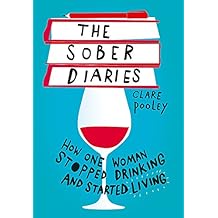

The Sober Diaries by Claire Pooley
I LOVED THIS BOOK. My interest in sober living started about three years ago as I contemplated the role alcohol played in my previous marriage/life chapter. My ex was a happy and frequent drinker, as was his family, as were our friends. Our respective cultures reinforced this norm, as did our lifestyle (expat development workers and frequent travelers tend to be a heavy-drinking lot). Without really noticing, I'd become a habitual drinker. Bored? How about a drink. In an airport? Obviously time for a beer. Celebrating? Drink. Bad news? Drink. School sucks? Have a glass of wine with that essay. Work challenging? Drink to decompress. Gallery slow? How about some bubbly to pass the time. Weekend? Day drink. Weekday? Vino with dinner. Anything, anything at all? Drink. Of course we were both very responsible people, kept up our obligations, never had "consequences," and in his eyes never had a problem...but for me there was a quiet and increasingly desperate feeling that something was very, very wrong. I started to cut back on my own consumption, and then after our divorce I had the opportunity to further examine my own habits and behavior and make some big changes. I still have an occasional drink, but my relationship with alcohol has changed completely. It is now the exception rather than the rule. I don't get drinks on auto pilot, and I certainly don't buy into the idea that you need alcohol to have fun, or cope, or be accepted. My current husband has a very similar approach, and our life is sober most of the time, often for long stretches. THIS BOOK WAS SO AFFIRMING OF THESE DECISIONS. Claire Pooley is a hilarious writer, and hearing how she became sober and then how she beat breast cancer while maintaining sobriety was inspiring. I highly recommend it, especially if you are reexamining your relationship with alcohol.


Alburquerque by Rudolfo Anaya
It's always fun to read a book set in your hometown, and this was no exception. Magical, mystical, poignant, and engaging. I hadn't read Rudolfo Anaya since high school, and it was like visiting an old friend. The storyline was compelling, felt ancient and modern all at once, and I loved the characters. Anyone with a connection to New Mexico will particularly enjoy reading this book.


Dear Sugar by Cheryl Strayed
What a punch to the gut and embrace to the heart. I bawled and cringed and laughed while reading Cheryl Strayed's no-bullshit advice to others, punctuated with devastating and uplifting stories from her own life. My friend Heather had recommended this to me shortly after we lost Baby AB, and I was happy to find this in my mom's bookshelf. Definitely helped me find perspective and strength.
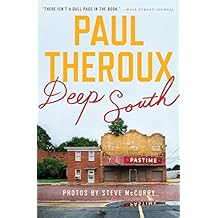

Deep South by Paul Theroux
This road trip narrative tells devastating and hopeful stories from America's southern states. I appreciated the author's attempt to present many perspectives, cultures, and ways of life. From gun shows to shacks in the Delta, economic ghost towns to sites where black youth were murdered, churches to restaurants, and the long stretches of highway in-between, the reader comes away with a real sense of the history and struggle and complexity of the region. I found the more academic interludes a little hard to get through, but the actual stories from the road were captivating. Highly recommend.
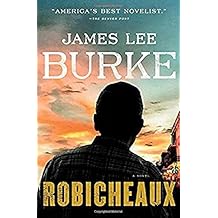

Robicheaux by James Lee Burke
I enjoyed reading all of the previous Dave Robicheaux detective novels, and this was no exception. Gritty, well-written, and full of Louisiana culture. The storyline was unpredictable and made for a real page-turner, although not ideal for bedtime reading because of the often gory situations.  


Red Sparrow and Palace of Treason by Jason Matthews
More not-ideal-before-bedtime reading, but oh so good. These spy novels are intelligent, complex, and compelling tales of politics, love, loyalty and betrayal. The main characters are very well developed. I enjoyed all the Russian language and culture, and the recipes at the end of each chapter are an unexpected bonus. I can't wait to read the final book from this trilogy.


The Pregnancy Instruction Manual by Sarah Jordan and David Ufberg
The Baby Owner's Manual by Louis Borgenicht and Joe Borgenicht
Now that I'm pregnant again (baby Anastasia is due in February 2019) my friend Marjana gave me these books that she'd enjoyed reading before her first child was born a several years ago. They are practical, easy to understand, and comprehensive. That said, both books are oriented to heterosexual couples and pander to antiquated gender roles. Mom gets tips for how to dress during pregnancy (avoid stripes that make you look larger that you already are!) and Dad is reminded to switch off Sports Center and make himself useful around the house. I get that it's an attempt at humor, but ugh. Otherwise useful books, and I'm sure I'll be consulting them in the future.
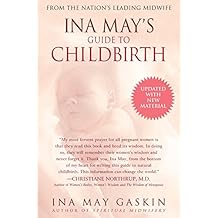

Ina May's Guide to Childbirth by Ina May Gaskin
This book is my Bible right now. I want to have an unmedicated vaginal birth in a hospital, so I'm trying to read everything I can about how birth is a natural and empowering process that women are entitled to experience free from a culture of fear. I love reading all of the birth stories from the Farm. These women and midwives are incredibly inspiring. I'll likely reread this about 10 times between now and February!

That's it! I'm proud to have read so much and look forward to squeezing in maybe one or two more books before the end of the year. What have you read lately that you really enjoyed? 

Friday, May 25, 2018

Catching Feelings


I just watched the South African film "Catching Feelings" by director-actor Kagiso Lediga. It came up as a suggestion on Netflix and I jumped on it. The cinematography left me with massive nostalgia for Johannesburg: the jacaranda-lined streets, the gray skies, the unique vibe, and oh that accent...I so miss that accent! But it wasn't all purple blossoms and good times: there was also realistic portrayal of the challenges in urban South Africa: drunk driving, bribing police, fenced and guarded homes and accompanying race-based fear, immediate discrimination of the main character by both whites and blacks when he loses his shoes and appears poor and possibly homeless, shantytown tourism by wealthy white foreigners, sexism, cell phone addiction, and in general lots of moral ambiguity.

I found it interesting that there was a distinction between Cape Town's racial situation (the only black people in a hip, upscale restaurant are the main character's party and the waiters; the student body at the university is majority white) and that of Joburg (portrayal of many middle and upper-middle class blacks with prominent positions in companies and academic institutions; nice restaurants and social events with racially diverse patrons; mixed race couples and friends groups; university student body majority black).

Although the movie is about an unhappy marriage and the moral boundaries of the main couple and their friends, the subtext is all about identity and racial politics (to paraphrase the main character, "I'm South African, everything is about race"). I appreciated that the film's perspective was not Eurocentric, and as an American I was interested in the subtle and not-so-subtle differences between our racial issues and those in South Africa. While I really enjoyed the film overall, I found the characters to be over-acted and many of the scenarios unbelievable, in particular the white "old man" author and how readily he is able to influence the main character and his wife, and how he is invited into their home. White privilege was brought up in the film but not explored very much, and I found it of note that colorism was not discussed at all (although it was most definitely present). Also how about those double standards regarding cheating for the main character and his wife?? And actually for the men in general? Ugh.

The role of alcohol and drugs in the film also struck me. The movie is basically about moral choices and behavioral gray area, and in 100% of the moments where characters make a critical move, they are massively drunk or high. It was frustrating to watch seemingly intelligent, educated, cultured, and independent characters lose all their willpower and convictions anytime alcohol is offered. Again, like the white privilege issue, there was a moment where the partying was scrutinized (Is this a problem? Do I need to be worried about you?), but instead of further exploring it, the questioner just jumped on the bandwagon and went bottoms up herself.

I guess I have a lot of critical points, and the movie definitely left me with a lot of food for thought. Overall, I definitely recommend it and am happy I took a chance on a random Netflix suggestion.

A final note is that the soundtrack to Catching Feelings was excellent. Tracks are listed below:

Chimanga – Dorothy Masuka
Let Me Live – Mpho Pholo & Moneoa Moshesh
Lenyora – Philip Tabane
Mama Liza – The Movers
Ngud (Ilala Vuka) – Kwesta featuring Casper Nyovest
Mahlalela (A.K.A Lazy Bones) by Letta Mbulu
Noma Themba – Letta Mbulu
Voice Inside – Lerato Moiloa
Joburg Girl – MXO
Ngubani Gama Lakho – MXO
Jungle Fever – MXO
Bring Back the Love – MXO
iZolo – MXO
Soweto Disco – The Movers
Why are you here – Ishmael Osekre
UNH! – Philip Tabane
Vidala Para Mi Sombra – Juana Pires Rafael and Ariel Zamonsky
100KMACASETTE by Okmalumkoolkat
Monsieur Bon Bon – Ebenhaezer Dibakwane
Mpahlenkulu – Mabiza and Zah
I Need You – David Kibuuka

Tuesday, November 02, 2010

The Procrastinator Rears Its Head

One thing about being a jewelry/metal arts student is that you can't really procrastinate. There is simply no way to get things done without putting in days - if not weeks - of hard work. Step by step, building on what you've done previously. At least in my semi-beginner state as a metalsmith, I haven't found out how to shortcut...not that I'd even want to, honestly.

That said, I *can* procrastinate in my other classes, primarily those that require essays to be written. I have a paper due in a few hours for my 4D class and just started writing last night. I have to finish it now, chop chop. I'm writing about the film "Black Orpheus" (1959) and how, while visually, musically and culturally fantastic, it creates and reinforces stereotypes about Brazil and Brazilians in popular media. Fun stuff.

We had total freedom in choosing the piece of media to review for this paper. We were also allowed to write whatever we wanted regarding said work - no guidelines whatsoever, other than "write an analytical paper". I find it funny that in every such instance, I go right back to the content of my first Bachelor's degree (Latin American Studies). Why reinvent the wheel, right?

I think at the very least I should get an A for efficiency: I chose topics in record time, don't have to do that much research because I'm already familiar with the subject matter, and my effort-to-results ratio is off the chart. :)

Now back to writing about Orfeu...

Monday, July 27, 2009

Visit from my Sogra

My mother-in-law came to visit for the first time a couple weeks ago, and we had a great time showing her Kruger Park and our daily life in Maputo. Unfortunately both Rico and I were quite busy that week, so Emilia really got a chance to know our flat and work routine as opposed to far-flung tourist hideouts, but it was still a great way to catch up and 'matar as saudades'.

Bonus points for a trip to Barberton en route to Johannesburg. Barberton is where my favorite novel, "The Power of One", is set. I felt like Peekay and Grandpa Chook might be around the next corner!


Thursday, November 22, 2007

Meme: Reading List

This one comes from my Romanian friend Alina.

My reading list currently consists of:

"Guns, Germs and Steel" by Jared Diamond. I started reading it back in June, but gave up about halfway through when I became a bit tired by the textbook style of the author's writing. But the material is really interesting, and I would like to better understand his theories about why certain societies advanced and others struggle to this day.

"Eat, Pray, Love" by Elizabeth Gilbert. I've been resisting this book for a long time. About 95% of my blog friends have read it and raved, but for some reason I've not been rushing to read it myself. Recently, my friend Tracy gave me a copy and I've decided to give in. This will be some of my principal plane reading material for my trip back home next month.

"On the Trail of the Koh-I-Noor Diamond" by Kevin Rushby. My friend Jenny gave me this book several months ago and I'm really excited to start reading. Also one for the multiple long-haul flights and layovers I will face next month. I think it will really appeal to the gem-nerd and adventurer sides of my personality.

Also on the list, though not definite yet, are something by Nadine Gordimer and perhaps some Isabel Allende.

It's funny - I love to read, and used to do it all the time for pleasure, but since moving to Mozambique I've somewhat dropped the habit. I think it's because I spend all day reading for my job in one way or another, so when it's time for me to relax and unwind in the evening or on the weekend, I have no desire to pick up a book. I much prefer to relax these days by making jewelry, watching tv, working out or dancing...

Consider yourself tagged if you are so inclined. I'm curious to see what you all are reading these days!

Thursday, November 01, 2007

What's Scarier: My Nasty Pink-Eye or "The Ring"?

I am spending the day at home today because I've managed to come down with conjunctivitis. It started yesterday, and I've been slightly miserable and goopy-eyed since then.

So far it's been an enjoyable day, given the circumstances. I made an out-of-this-world batch of chocolate-coconut brownies, have had multiple cups of tea, finished revising a fundraising proposal for an old client, thus wrapping up one of my last remaining freelance jobs, and am now waiting for Jenny to come over and have lunch.

This evening I've committed to going to Movie Night, the regular Thursday get-together hosted by a couple of boys from the World Food Program. Tonight's film is "The Ring", which is by far the scariest thing I've ever seen on a screen. I first watched it in Austin at my friend Michelle's house, and had to talk out loud to myself to make it on the drive over the railroad tracks and back to my house through deserted back roads at 2am without totally freaking out.

I don't really know why I'm so excited to watch something I know will give me nightmares for the next 3 weeks, but I am.

Here's hoping the old pink-eye clears up in time for the movie...

Ah, on a related note, there is going to be a big Halloween party here in Maputo this Saturday and I am at a loss for a costume. Any ideas (that don't involve the purchase of anything complicated, and are ideally warm-weather-friendly)???

Tuesday, July 10, 2007

Feverish Questions

It was bound to happen after all the time I spent breathing recirculated airplane air over the last 2 months. I've caught a bug that I can't seem to kick. My throat is sore, I'm coughing nonstop and I have a low-grade fever. Nothing super serious, but a real pain nonetheless. I hate being sick.

I started reading "Guns, Germs and Steel" by Jared Diamond while on my trip to the US. Although I admit to be struggling significantly with his heavy, textbook style of writing, the content is certainly interesting.

One of the things that struck me was his discussion of fever. Our bodies are so smart! When we are affected by a microbe or virus that makes us sick, something clicks in the brain to elevate body temperature a few degrees. The extra heat won't harm us, but in many cases the foreign element can't survive the slight increase in temperature and dies off, leaving us to recover naturally. What an amazing strategy.

It makes me think, however, that it is probably counter-productive for us to take Tylenol or Aspirin when we are suffering from a fever. In bringing the body temperature back down to normal levels, wouldn't that just allow the germs to stay alive and keep making us sick? Shouldn't the best option be to let a slight fever run its course without medication to bring it down, thus respecting our body's natural healing strategy?

Why are we encouraged by doctors to take fever-reducers when we run a temperature? (Obviously one must make a distinction between a high, potentially health-threatening fever and one that is less severe.) The more I think about it, the less it makes sense...

Sunday, June 10, 2007

Speaking of Great Books...

While on my way from Mozambique to Rio, and then from Rio to San Francisco, I had ample time to catch up on my reading. I love to read for pleasure, but do surprisingly little of it at home in Maputo, perhaps because so much of my time is spent reading for professional reasons. Not that work-reading can't be pleasurable - I am honestly interested in many of the market research and development-world news I keep up on - but it just takes time and effort, and at the end of the day I'd rather make something with my hands like jewelry or a great meal than sit buried with my nose in a book.

So with two 10-hour flights and an equal number of 12-hour layovers on this trip, I had plenty of opportunity to read some great books.

The first one I read was "A World of Strangers" by Nadine Gordimer, a South African author. Although this book was written in 1958, and the main character is a man who works in publishing, I found I related quite a bit to the story on a personal level.

This was the second book by Nadine Gordimer that I'd read. The first one was her critically acclaimed 2001 novel "The Pickup", which I enjoyed immensely once I'd managed to get used to her sometimes difficult style of writing.

I find she writes in a similar manner to the way I catch myself talking sometimes. I'll begin a sentence in the middle, then loop around to the part that actually makes sense, making my conversation partner pay particular attention to see what on earth I'm talking about. I think I tend to do this because I talk as I think a lot of the time, and don't bother to rearrange the language in my head to make it more digestible for a listener.

With a lot of Nadine Gordimer's writing, I found I had to speak sentences aloud to understand what her characters were trying to say. She also has a strange habit with comma use, putting commas in places you wouldn't expect according to proper grammar rules, but that make perfect sense when considering the natural rhythm of spoken word.

The other great book I read was "Don't Let's Go to the Dogs Tonight" by Alexandra Fuller, a Zimbabwean author who spent her childhood in what was then Rhodesia. She wrote from a child's perspective what it was like to grow up the daughter of white farmers during that country's struggle for independence. It was, like "The Power of One" and "The Poisonwood Bible", a poignant but also very funny take on some of history's most difficult chapters.

I think I will pick up additional books by both Nadine Gordimer and Alexandra Fuller when I am in the Johannesburg airport on my layover at the end of the month. Since Ricardo will be spending some significant time in Rio again this year, I imagine I'll have more of an inclination to read in the quest to make time pass as fast as possible in his absence.

Friday, June 08, 2007

Fear the Details Shall Disappear

I recently finished reading "The Poisonwood Bible" by Barbara Kingsolver and it completely blew me away. That is the kind of book I dream about writing. The characters stuck in my head for days, there were bits of dialogue that had me laughing out loud by my self (not that difficult, really, when the narrators are a bunch of girls from 1960's Georgia), and I even cried at the end of the book.

Another thing that really impressed me is how similar the Congo described in the book is to modern-day Chimoio, and to all of the rural areas we've visited in Mozambique. Many of the details in the novel - the kind of "Baptist donation bin" clothes people wear, including men donning "ladies' wear jackets", the way women pound manioc in giant mortar and pestles, the back-breaking labor that the women do while the men sit idly about, the long printed swaths of fabric used as wrap-around skirts over all other layers of clothes... It was all incredibly familiar, and I was left with the distinct impression that the author herself must have spent some significant time in her life observing the people and places of the Congo.

It's been a long time since I read a book that I enjoyed so much. I think the last one was "The Power of One" by Bryce Courtenay. Coincidentally both are books about childhood in Africa, told primarily from the perspective of young people growing up in countries in the midst of tremendous political change.

I was so in awe of "The Poisonwood Bible" - and really continue to be, truth be told - that it's been difficult to imagine sitting down to write something myself, even if just a blog entry.

I take solace in the fact that Barbara Kinsolver apparently wrote this book 30 years after her experiences in Africa. Many times I get in a panic because I fear that I will forget, or otherwise be unable to replicate, the experiences that I am having now in Mozambique. I'd very much like to write a proper book about what we've seen in others and lived through ourselves, but since I no longer keep a personal journal where I can write absolutely candidly, I fear the critical details of what I want to share will dry up and blow away if not recorded RIGHT NOW.

Yes, there is the blog, but there is a whale of information that I've not put up here over the last 2 years, either because it was somebody else's tale to tell (I try not to write about other people's dirt online), or it was the kind of story that I fear if published while we are still in the country could create some significant problems for us (as they have to do with blatant corruption and deceipt, both on the part of Mozambicans and foreigners we've come across).

I know that a tremendous amount of research went into writing "The Poisonwood Bible", that certainly the author didn't simply sit down and pour out all those fabulously accurate details in the space of a couple of months. I know she had to rely on other books on the subject, a KiKongo dictionary, the Bible, and friends and researchers up-to-date on the political and cultural happenings of the 1960's.

Thinking about this process, and the fabulous novel that resulted, gives me hope that I will be able to write the things I desire when the time is right. If Barbara Kingsolver was able to do it 30 years after the fact, then 5 of 7 shouldn't be too tragic for me, I imagine. Or even more, who knows. I am aware that hindsight will play a vital role in what I write and how I write it. The kind of understanding and perspective I hope for in my eventual writings about Mozambique cannot be forced to exist, and can only come about through good old time.